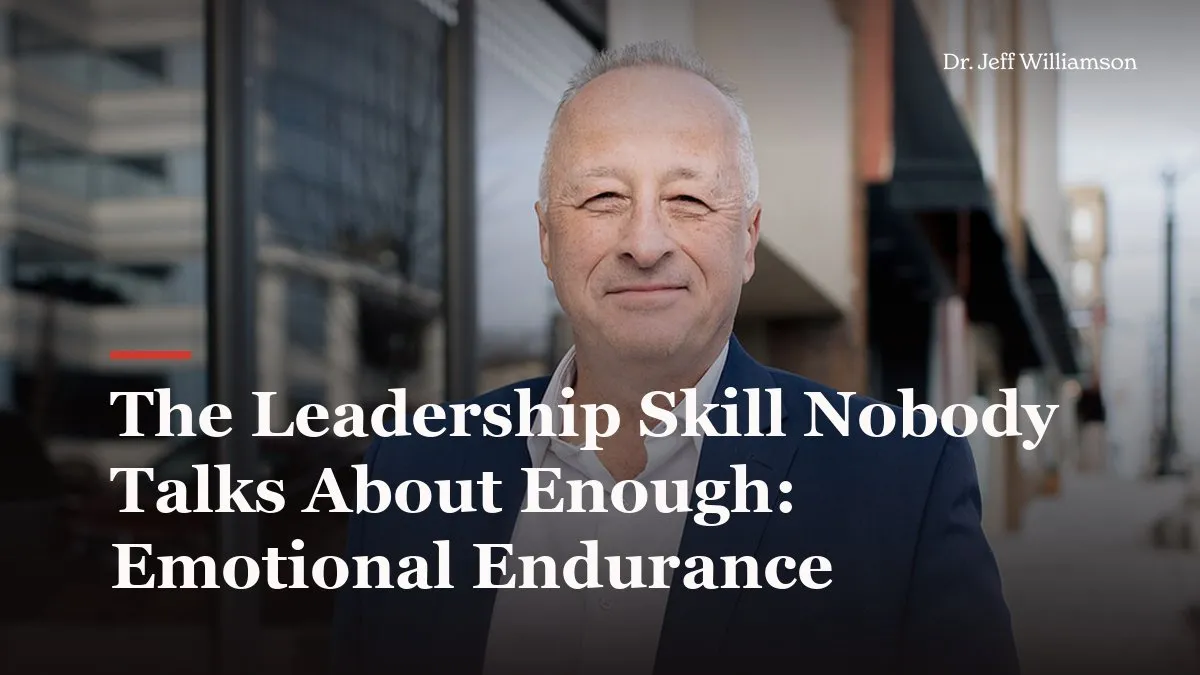
The Leadership Skill Nobody Talks About Enough: Emotional Endurance
Most people think leadership is about vision, strategy, and decision-making.
And it is.
But there’s another dimension that often goes unseen: emotional endurance.
Leadership requires you to carry uncertainty without transferring it to others. To absorb pressure while still creating clarity. To remain steady when outcomes aren’t guaranteed.
Your team looks to you for stability, even when you’re still figuring things out yourself.
This is why leadership is not just intellectual work. It’s emotional work.
Emotional endurance is the ability to remain grounded when things feel unsettled. It’s the ability to have hard conversations. To hold accountability and belief in someone at the same time. To stay engaged even when progress is slower than expected.
Many leaders unknowingly drain themselves by trying to carry everything alone.
But leadership was never meant to be isolated.
The most effective leaders build rhythms that sustain them. They reflect. They seek counsel. They create space to think, not just react.
They understand that how they lead themselves determines how they lead others.
Your strengths play a powerful role here. Leaders high in Responsibility carry weight deeply. Leaders high in Empathy feel what others feel. Leaders high in Achiever push relentlessly forward.
These strengths are gifts, but they must be managed intentionally.
Leadership isn’t about becoming harder. It’s about becoming stronger and wiser at the same time.
Emotional endurance allows you to stay present long enough to see transformation happen, not just in your organization, but in yourself.
Keep reading